

Finds cameras without knowing every address
WS-Discovery and SSDP first, then a sweep of the network for cameras that answer neither. Type the address when you already know it.
listening for cameras · 3 sFor installers, and for the people they install for
View and configure ONVIF and RTSP cameras across brands, on your own network. No ViewTile account, no cloud relay. When a connection fails, you see what happened and what to try next.
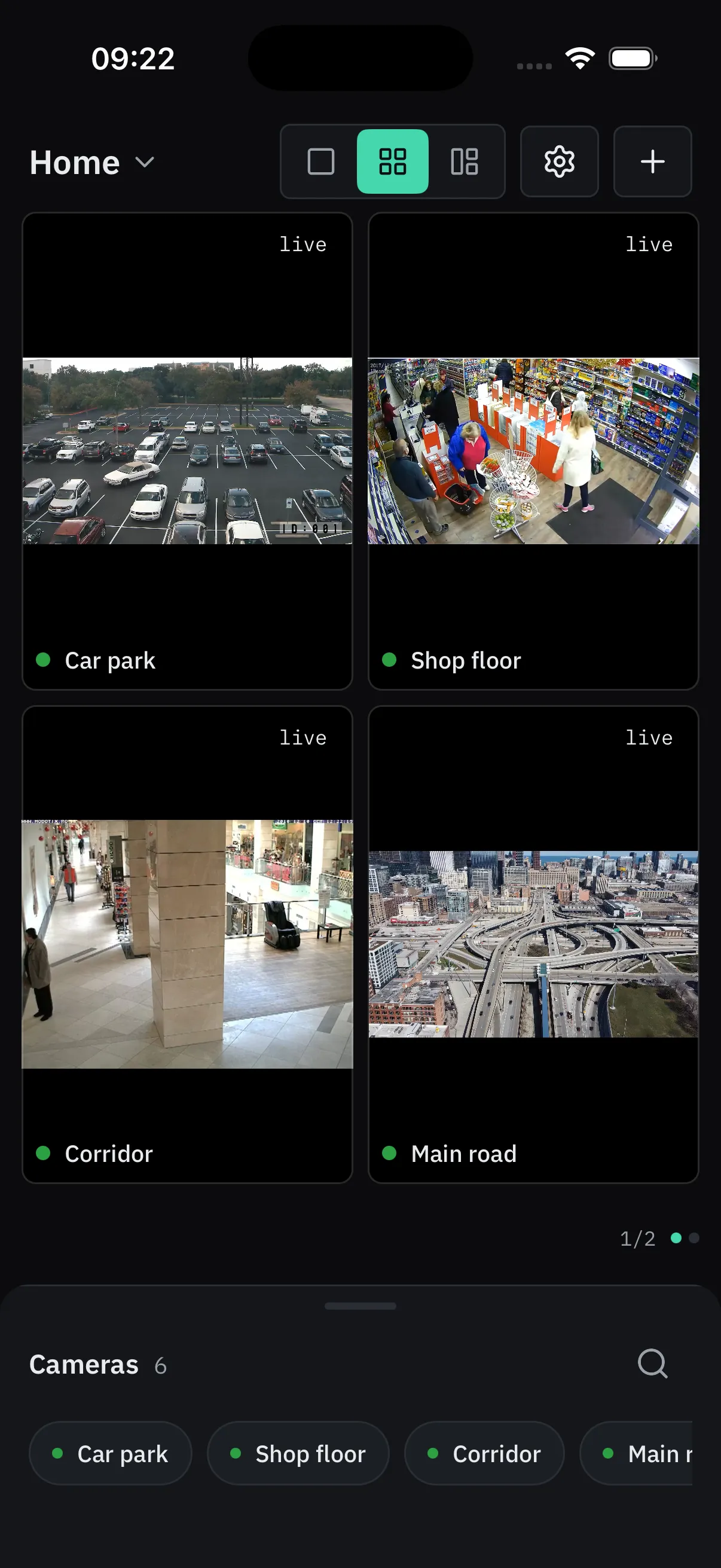
WS-Discovery and SSDP first, then a sweep of the network for cameras that answer neither. Type the address when you already know it.
listening for cameras · 3 s1×1, 2×2 and 1+3 layouts, saved views for “Yard” and “Tills”, and a wall that turns its own pages so twelve cameras fit one screen.
1/2 · Car park (PTZ) · 640×360Grids use the substream; full screen uses the full stream. When the full stream cannot keep up, it drops to the substream by itself, says so, and one tap puts it back.
dropped to substream · tap MAIN to go backNot “connection failed”. A wrong password, a camera clock that is off, a blocked port, an unreachable host and a stream that keeps dropping are each their own answer, with the next step.
AUTH_FAILED_CLOCK_SKEW · +47 minResolution, frame rate and bitrate, picture and exposure, PTZ and presets, the camera clock — where the camera offers them, and the screen says which it did not.
GetVideoEncoderConfigurationOptionsViewTile never routes a stream through a server of its own: the camera talks to your device directly. Passwords live in the device keychain. An app lock covers the wall before it reaches the app switcher.
no account · no cloud · no analytics02 — What a failure looks like here
A camera whose clock is off refuses a correct password with the same fault it gives a wrong one. ViewTile measures the clock before it signs in and compensates for the difference; when the camera still refuses, it measures again and says which of the two is the likely cause.
This is a recorded case from the test suite, worded as the app words it. Every failure carries a likely cause and a next step, and the diagnostics screen keeps what the camera answered last time so you can copy a report and send it on.
The camera’s clock is 47 minutes ahead of this phone. ONVIF authentication rejects timestamps outside a narrow window. The camera’s clock also moved between two measurements, so this app can’t compensate for it.
→Fix the camera’s time or enable NTP on it, then try again.
Open the app on the Wi-Fi the cameras are on. It looks for them; you can also type an address.
The camera’s own username and password. ViewTile checks reachability, ONVIF, the clock and the streams, and tells you which step failed if one does.
Pick the stream, name the camera, and it is on the wall. Configure it from there, on the ground.
04
There is no ViewTile server for anything to go through. The app talks to your cameras directly, over your own network, and that is the whole of it.

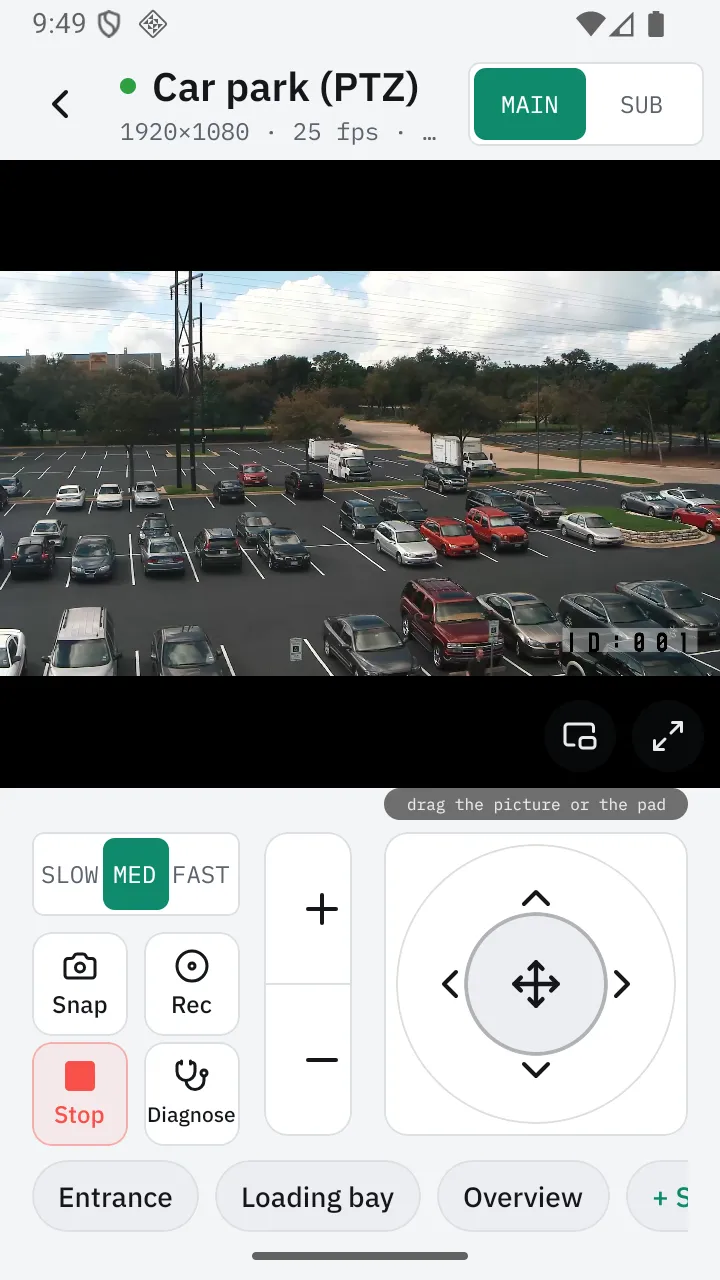

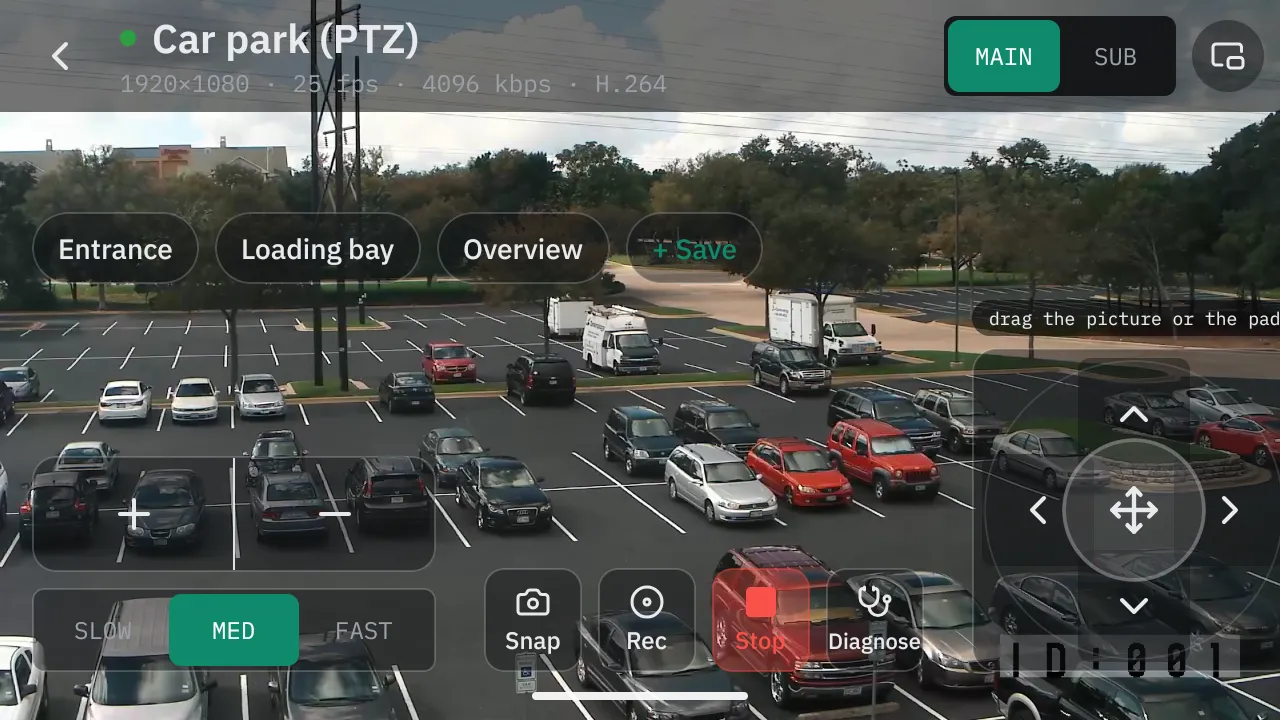
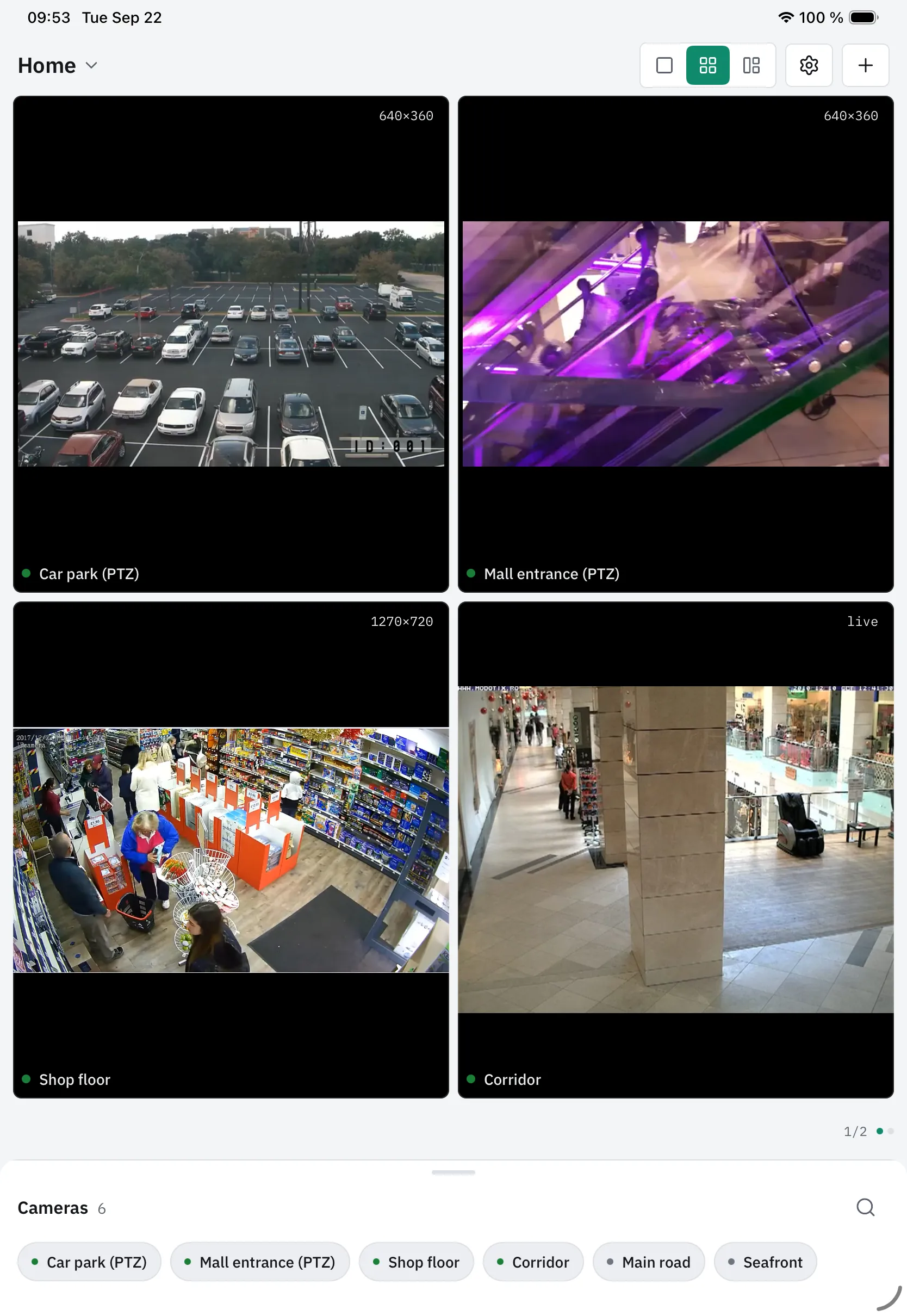


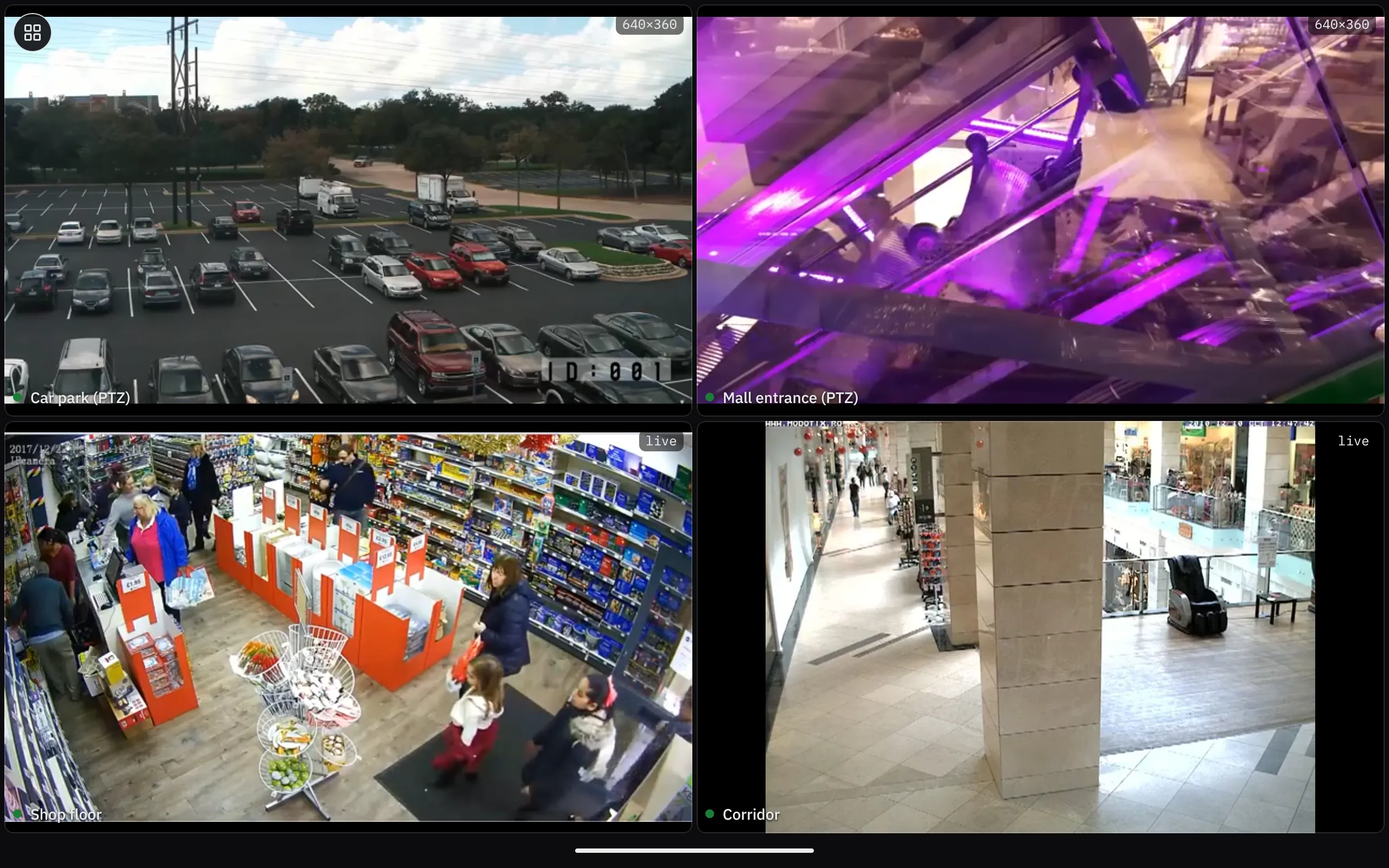

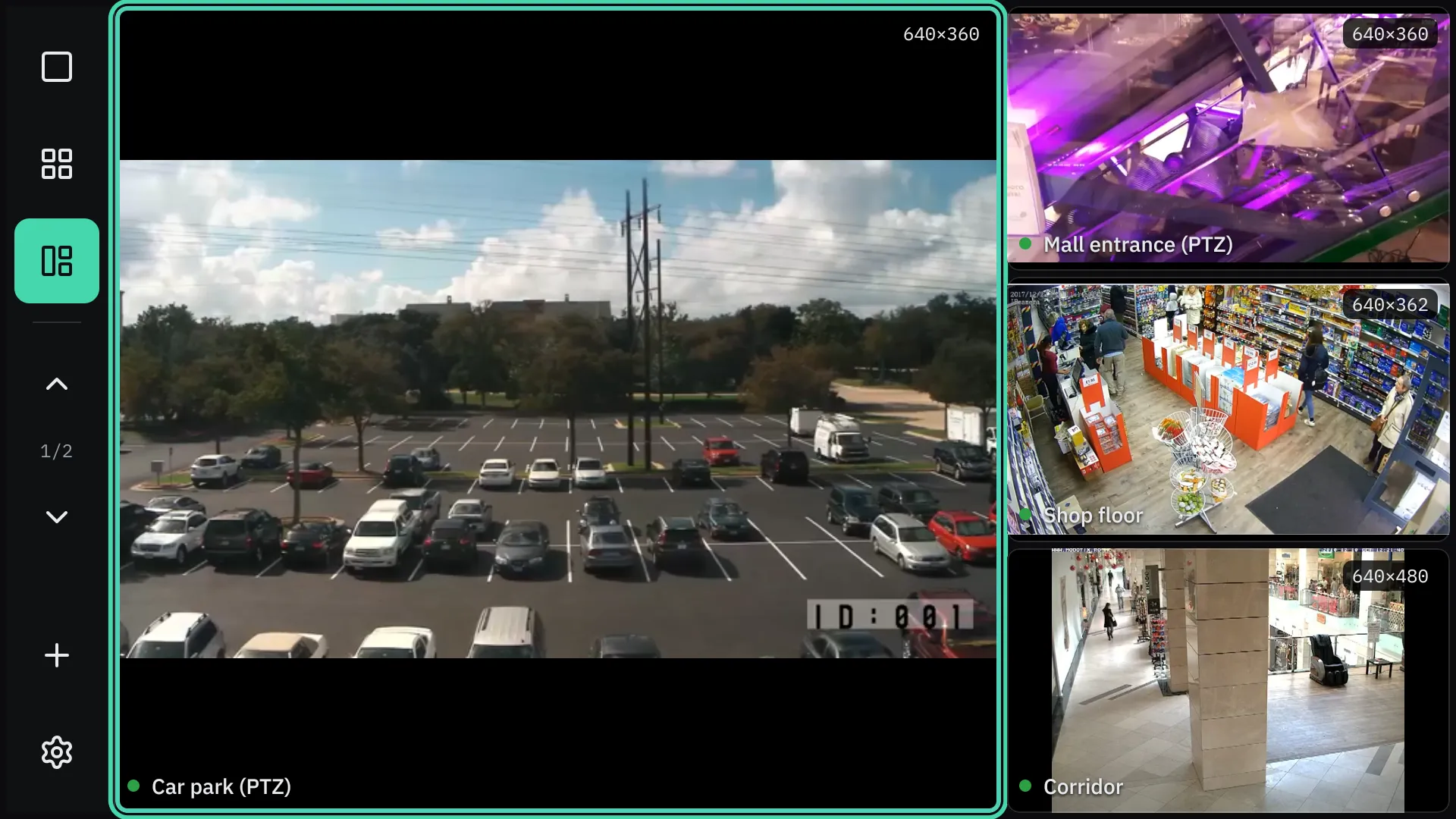

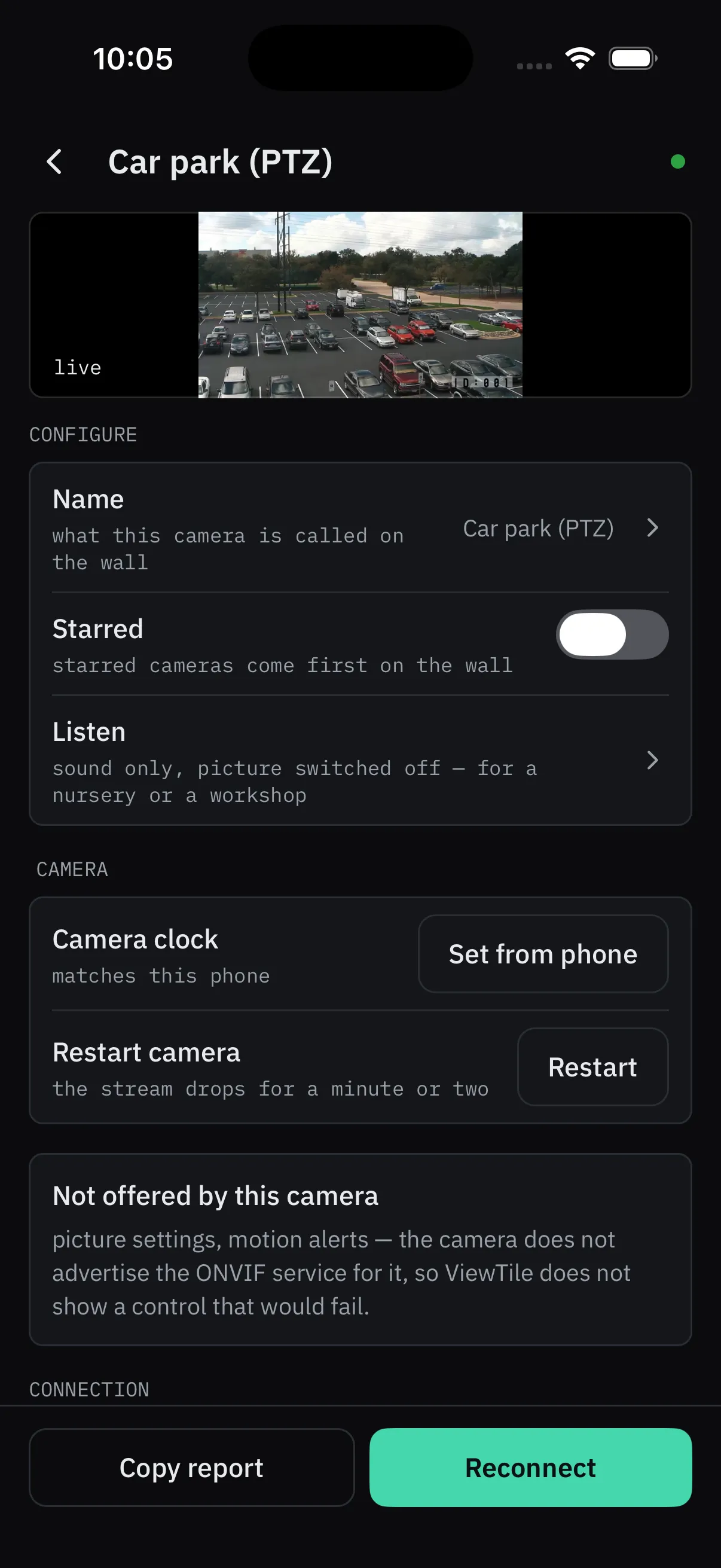
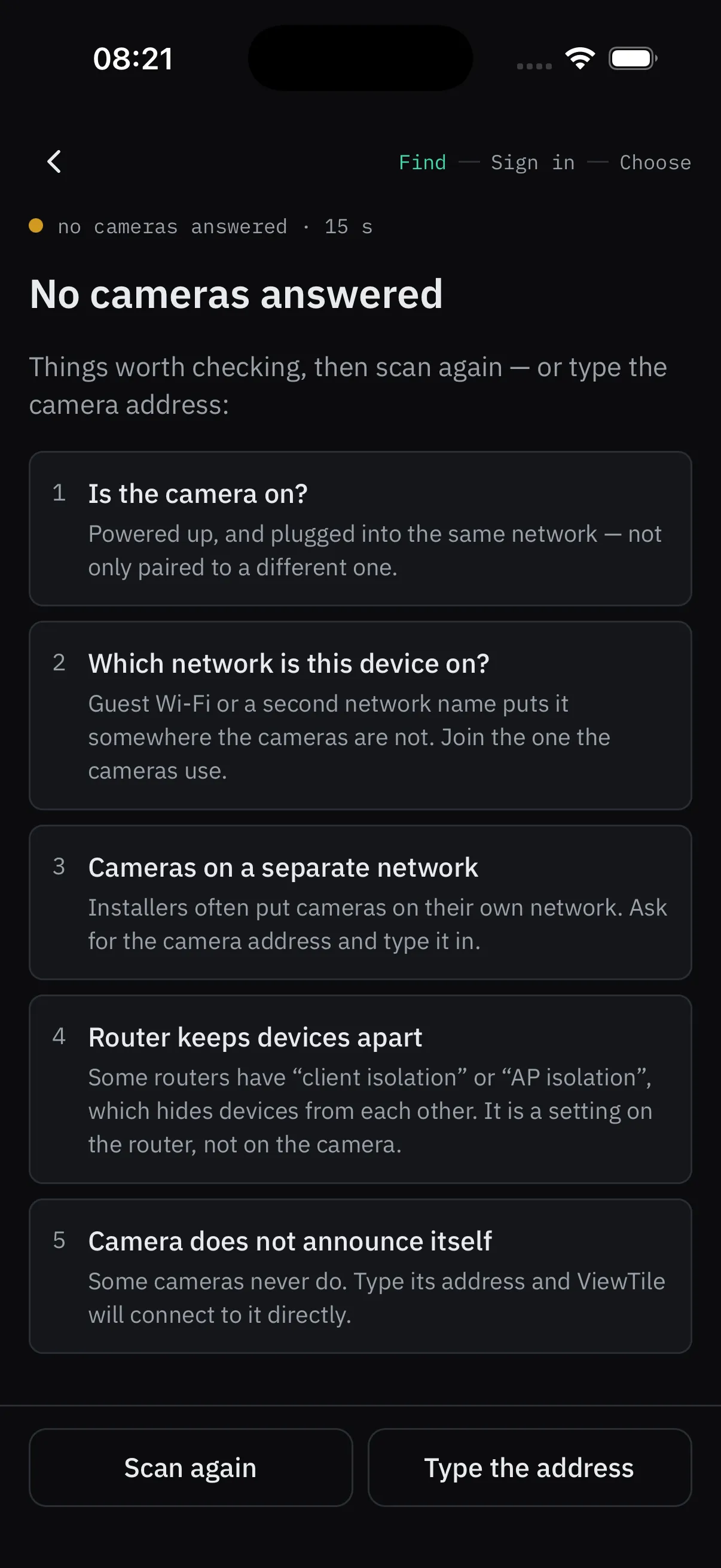


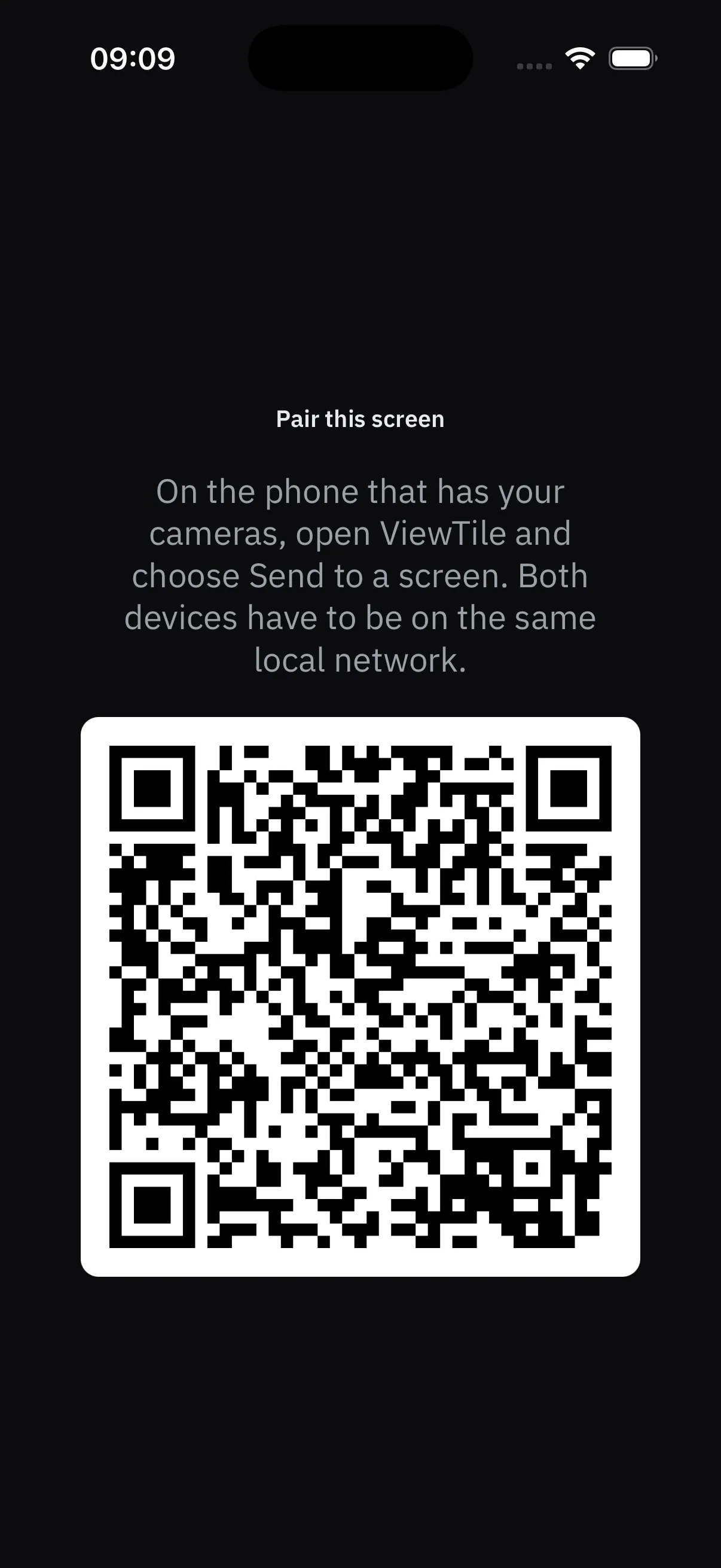
One codebase, laid out for each screen. Where each platform stands today:
| Platforms | Status |
|---|---|
| iPhone and iPad | built · real-camera testing next |
| Android phones and tablets | built · real-camera testing next |
| Android TV | in development · a wall driven by the remote |
| Mac | the iPad app on Apple silicon |
Nothing is in the App Store or Google Play yet. ViewTile has been built against an ONVIF emulator and a lab of test streams; testing against real cameras is the next step, and the store links will appear only after it.
Big targets, high contrast, text that follows the system size. It reads at arm’s length on a ladder and from across a room on a television.